If you have ever dragged a loaded 5-gallon bucket across a garage floor, driveway, shop, or detailing bay, you already know the truth: the wheels matter. A bucket dolly can look sturdy, have a nice shape, and technically “roll,” but if the casters are cheap, tiny, loud, sticky, or rough, the whole setup feels frustrating.
That is why urethane casters are such an important detail on a 5-gallon bucket dolly. They are not just a small hardware choice. They affect how smoothly the dolly moves, how controlled it feels, how much noise it makes, and how well it handles real work surfaces.
In this article, we will break down what urethane casters are, how they compare to basic plastic wheels, why caster size matters, and what to look for when choosing a bucket dolly for detailing, garage work, cleaning, painting, washing, or general shop use.
What Are Urethane Casters?
Urethane casters are wheels made with a polyurethane-style tread. In simple terms, urethane is a durable wheel material that offers a helpful balance between hardness and cushioning. It is tougher than many soft rubber wheels, but usually smoother and more floor-friendly than cheap hard plastic wheels.
That balance is exactly why urethane is popular in carts, dollies, shop equipment, industrial casters, and other rolling products that need to move smoothly while carrying weight.
On a 5-gallon bucket dolly, urethane casters can make a big difference because buckets are often heavier than people expect. Add water, soap, tools, brushes, towels, bottles, compound, grout, paint, drywall mud, or cleaning supplies, and suddenly that “simple bucket” is not so simple anymore.
Why Caster Material Matters on a Bucket Dolly
The caster is the part of the dolly that actually touches the ground. That means it controls a lot of the user experience.
A good caster helps the dolly roll smoothly, turn predictably, and move without fighting you. A bad caster does the opposite. It can chatter, skid, catch on small cracks, leave marks, feel unstable, or make the dolly harder to pull than it should be.
This matters even more with bucket dollies because a 5-gallon bucket has a tall, narrow shape. When the bucket is full, the weight sits higher than it does on a low cart or flat platform. That means rough movement, sudden wheel stops, and poor caster control can make the whole setup feel less stable.
Urethane Casters vs. Cheap Plastic Casters
Not all caster wheels are created equal. Some low-cost bucket dollies use basic plastic-style wheels because they are inexpensive. They may work fine on perfectly smooth floors with light loads, but they can become annoying fast in real-world use.
Cheap plastic casters are often harder, louder, and less forgiving. They can feel rough over concrete seams, driveway texture, garage floor imperfections, and small debris. They may also transmit more vibration through the dolly, which is not exactly what you want when you are moving a bucket full of liquid next to a vehicle, wall, cabinet, or customer’s car.
Urethane casters are generally a better choice when you want a smoother, more controlled rolling feel. They are commonly chosen for applications where floor protection, reduced noise, durability, and easier movement matter.
Why Smooth Rolling Matters More Than People Think
A bucket dolly is supposed to save effort. That is the whole point.
If the dolly rolls poorly, you end up pushing, pulling, dragging, lifting, or fighting the bucket anyway. At that point, congratulations, you have purchased a rolling argument.
Smooth-rolling casters help make the dolly feel more natural to use. Instead of stopping every time the wheel hits a seam, pebble, or rough patch, a better caster helps the dolly keep moving with less drama.
This is especially helpful for:
- Car detailing and washing
- Garage and shop work
- Mobile cleaning setups
- Painting and drywall work
- Janitorial and maintenance tasks
- DIY projects around the house
- Moving tools, towels, brushes, bottles, and supplies with a bucket
The smoother the dolly rolls, the less you have to think about it. That is the goal. Tools should help you work, not become another project.
Urethane Casters Can Help Protect Floors
One of the biggest advantages of urethane caster wheels is that they are generally easier on floors than many harder wheel materials. While no caster can guarantee zero marks on every surface, urethane wheels are commonly used where floor protection is important.
This can matter in garages, coated concrete shops, finished floors, commercial spaces, detailing studios, and customer-facing work areas. A hard plastic wheel can feel harsh and noisy, especially when the bucket is loaded. A urethane wheel gives you a better mix of durability and surface-friendly movement.
If you care about your floors, your customer’s floors, or the polished look of your work area, the caster material is not a throwaway detail.
Urethane Casters Are Usually Quieter
Nobody wants a bucket dolly that sounds like a shopping cart with a personal vendetta.
Harder wheels tend to transmit more noise and vibration, especially on concrete. Urethane wheels can help reduce that harsh rolling sound and make the dolly feel more refined. This may not seem like a huge deal until you use the dolly every day in a garage, shop, detailing bay, warehouse, or indoor workspace.
Less noise also makes the product feel better built. That is not just vanity. When a tool feels smoother and quieter, people are more likely to actually use it.
Why 3-Inch Casters Are Better Than Tiny Wheels
Wheel material matters, but so does wheel size.
Smaller caster wheels can work on smooth floors, but they tend to struggle more with cracks, seams, small debris, floor texture, and uneven surfaces. A larger wheel has an easier time rolling over small obstacles because it approaches them at a better angle.
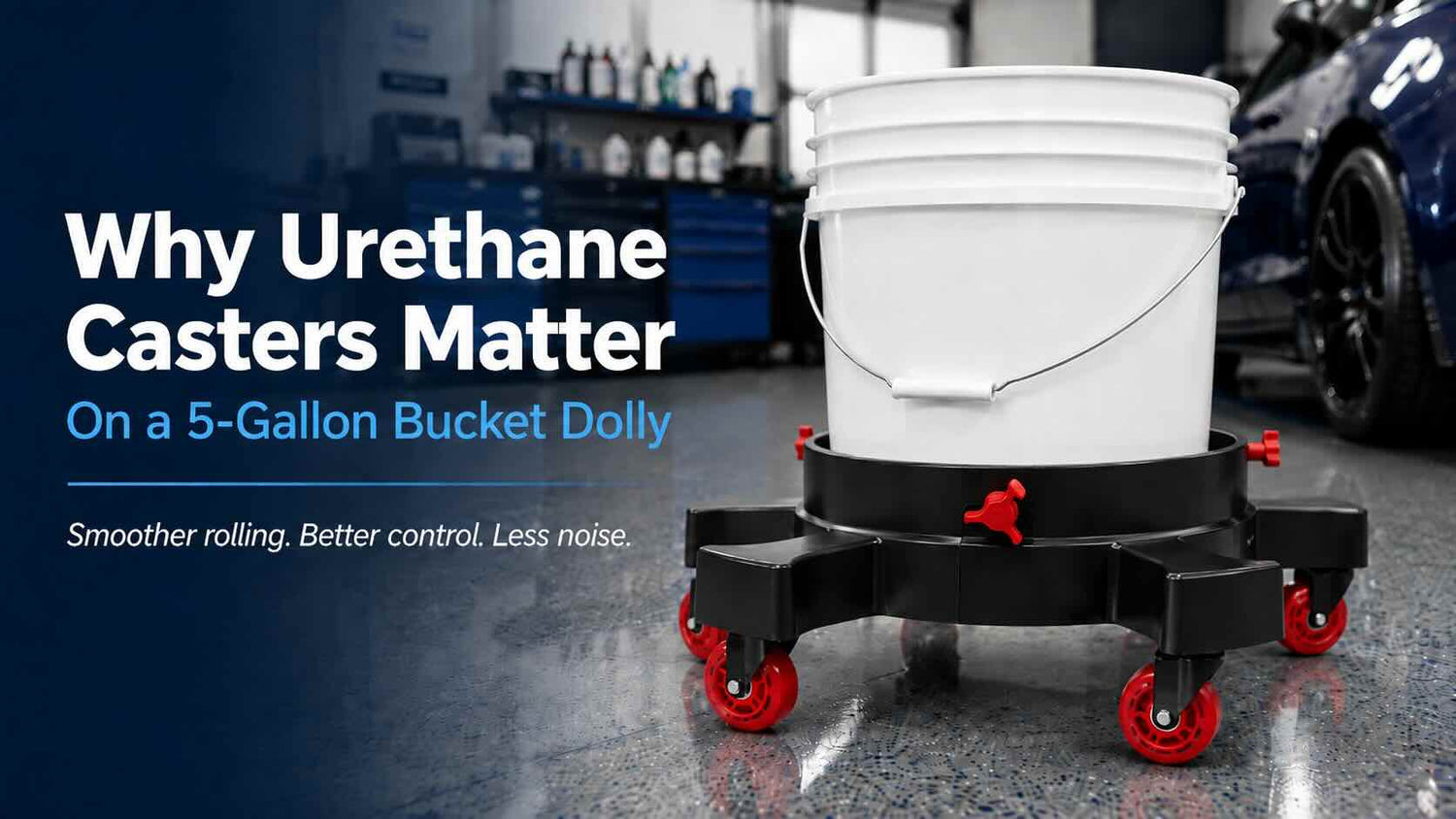
That is one reason the Boost-A-Bucket Anti-Tip Bucket Dolly uses 3-inch urethane casters. The larger caster size helps create a smoother rolling experience across common work areas like garages, shops, driveways, and detailing spaces.
On a loaded bucket dolly, that matters. A bigger, smoother caster can make the dolly feel less twitchy and less likely to get hung up on little imperfections in the floor.
Why Locking Casters Matter on a Bucket Dolly
Rolling is only half the story. Sometimes you want the bucket to move. Other times, you want it to stay exactly where you put it.
Locking casters help keep the dolly in place when needed. That is especially useful when you are working around a vehicle, dipping brushes, grabbing towels, mixing material, loading tools, or using the bucket in a sloped or active work area.
The Boost-A-Bucket Anti-Tip Bucket Dolly includes two locking casters, giving users the ability to roll freely when moving and lock the dolly down when they want more control.
How Urethane Casters Help Car Detailers
For car detailing, caster quality is a big deal. Detailers are constantly moving around vehicles, working close to paint, wheels, trim, glass, and body panels. A bucket that jerks, catches, tips, or rolls unpredictably is more than annoying. It can interrupt the workflow and create unnecessary risk.
Urethane casters help the dolly move more smoothly around the vehicle, especially on garage floors and detailing bays. When paired with a stable dolly design, they make it easier to keep wash supplies, brushes, towels, and tools close without constantly lifting and carrying a loaded bucket.
If you are already investing in good wash mitts, drying towels, brushes, chemicals, and tools, the bucket setup should not be the weak link.
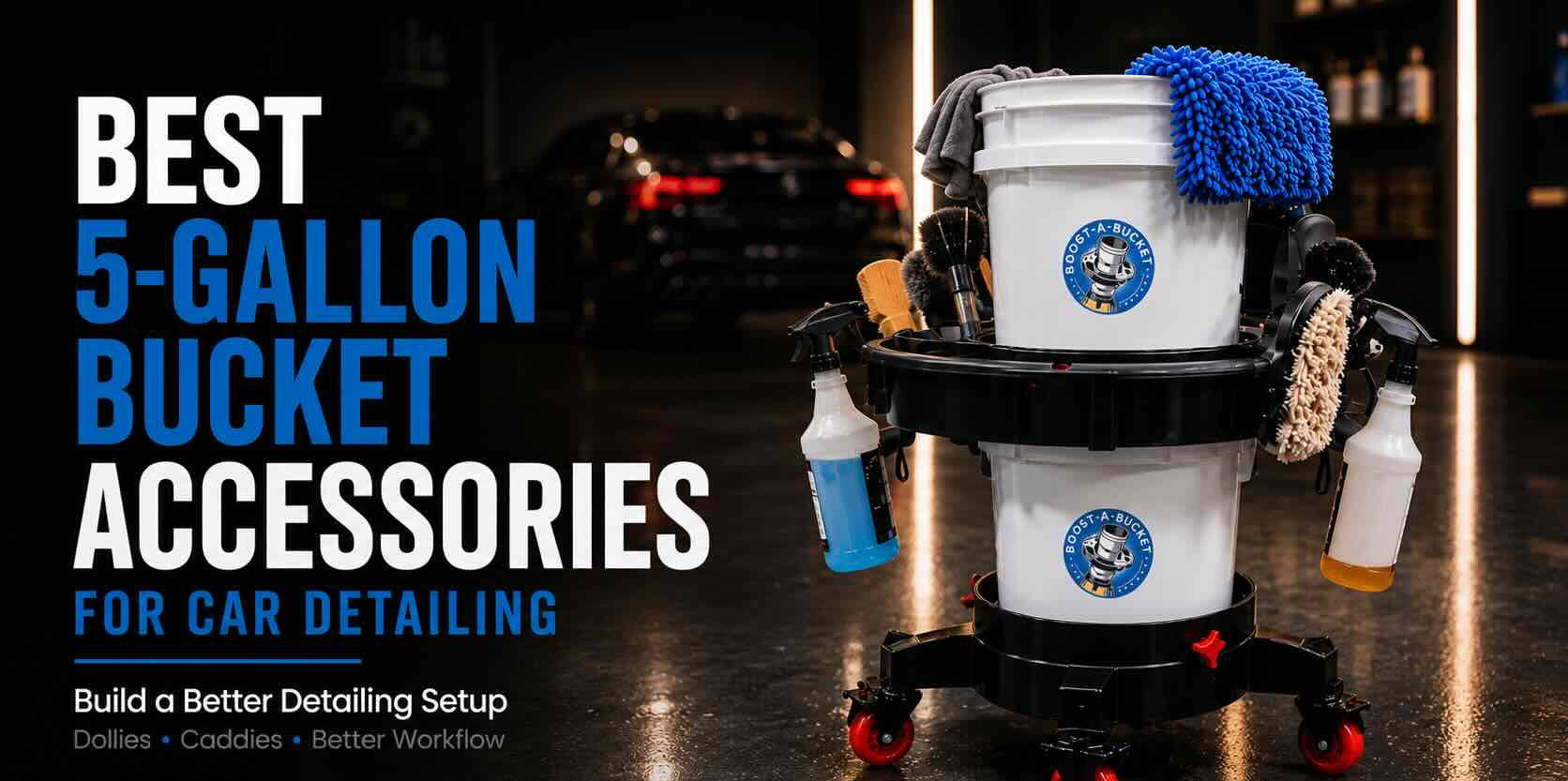
For more setup ideas, read our guide to the best 5-gallon bucket accessories for car detailing.
How Urethane Casters Help Garage, Shop, and DIY Users
Bucket dollies are not just for car detailing. They are useful anywhere a 5-gallon bucket is part of the job.
In a garage or shop, a bucket dolly can help move cleaning supplies, tools, parts, towels, fluids, and work materials. Around the house, it can help with washing, maintenance, painting, organizing, and cleanup. On job sites, it can reduce the need to drag or carry a heavy bucket from one spot to another.
In all of those situations, the wheels make or break the experience. Urethane casters help turn a bucket dolly from a basic plastic platform into a smoother, more useful work tool.
Stability Still Matters: Casters Are Only Part of the Dolly
Good casters are important, but they are not the only thing that matters. The dolly base design also plays a major role in stability.
Many standard bucket dollies use a compact round base. That can work, but it does not always provide the most stable footprint when the bucket is full, top-heavy, or pulled from an angle.
The Boost-A-Bucket Anti-Tip Bucket Dolly was designed with patented 4-inch extended legs to create a wider, more stable stance than a typical round bucket dolly. It also has an 11.5-inch opening designed to fit a wide range of standard 5-gallon buckets and the Boost-A-Bucket Caddy Organizer.
That combination matters: a stable base, smooth 3-inch urethane casters, and locking wheels all work together to create a better bucket dolly experience.
What to Look for When Buying a Bucket Dolly
If you are comparing bucket dollies, do not just look at the price and shape. Look at the details that affect how the dolly actually performs.
Here are the big things to check:
- Caster material: Urethane casters usually provide smoother rolling and better floor-friendly performance than many cheap plastic wheels.
- Caster size: Larger casters, like 3-inch wheels, generally handle cracks, seams, and rougher surfaces better than tiny wheels.
- Locking wheels: Locking casters help keep the dolly in place when you do not want it rolling away.
- Base stability: A wider stance can help reduce tipping compared to compact round designs.
- Bucket fitment: Make sure the dolly works with standard 5-gallon buckets.
- Real-world usability: Think about where you will use it: garage floors, driveways, shops, detailing bays, job sites, or indoor work areas.
Pairing a Dolly with a Bucket Caddy Organizer
A bucket dolly helps you move the bucket. A bucket caddy organizer helps you carry more around the bucket.
These are two separate products, but they work extremely well together. The Boost-A-Bucket 5-Gallon Bucket Caddy Organizer adds storage space around a standard 5-gallon bucket for brushes, bottles, towels, tools, and supplies. The dolly helps move that setup around your work area.
If you want the full system, the Boost-A-Bucket Dolly & Caddy Combo pairs both products together.
Final Thoughts: The Wheels Are Not a Small Detail
Urethane casters may not be the flashiest part of a bucket dolly, but they are one of the most important. They affect how the dolly rolls, how it feels when loaded, how much noise it makes, how well it handles common work surfaces, and how enjoyable it is to use day after day.
If you are buying a 5-gallon bucket dolly, do not ignore the wheels. Cheap casters can make a good idea feel clumsy. Better casters can make the whole setup feel smoother, more controlled, and more professional.
The Boost-A-Bucket Anti-Tip Bucket Dolly uses 3-inch urethane casters, two locking wheels, and a patented extended-leg design to help create a smoother, more stable bucket-moving experience for detailing, garage work, cleaning, DIY projects, and everyday use.
Because when you are working with a loaded bucket, the last thing you need is a dolly that fights back.
Frequently Asked Questions About Urethane Casters on Bucket Dollies
Are urethane casters better than plastic casters?
For many bucket dolly applications, yes. Urethane casters generally roll smoother, feel quieter, and are more floor-friendly than many cheap plastic caster wheels. Plastic wheels can work for light use on smooth floors, but urethane is usually a better choice for a more premium rolling experience.
Why do 3-inch casters matter on a bucket dolly?
Larger casters usually roll better over small cracks, seams, debris, and uneven floor texture. A 3-inch caster can feel smoother and more controlled than a smaller wheel, especially when the bucket is loaded.
Do urethane casters mark floors?
Urethane casters are commonly used where floor protection matters, but no wheel can guarantee perfect results on every surface. Floor condition, debris, load weight, and wheel cleanliness all matter. In general, urethane wheels are a strong choice when you want smoother, more floor-friendly movement.
Are urethane caster wheels quieter?
Urethane caster wheels are often quieter than hard plastic wheels because they can help reduce vibration and harsh rolling noise. This is especially noticeable on concrete, garage floors, and indoor work surfaces.
What is the best bucket dolly for car detailing?
A good detailing bucket dolly should roll smoothly, feel stable, use quality casters, and fit standard 5-gallon buckets. The Boost-A-Bucket Anti-Tip Bucket Dolly is designed with 3-inch urethane casters, two locking wheels, and a patented extended-leg anti-tip design for better stability and smoother movement around vehicles.